By dholmes | Published April 21, 2013 | Posted in Government Employees, Recent Developments 2013 | Leave a comment
Search Site
Recent Blog Posts
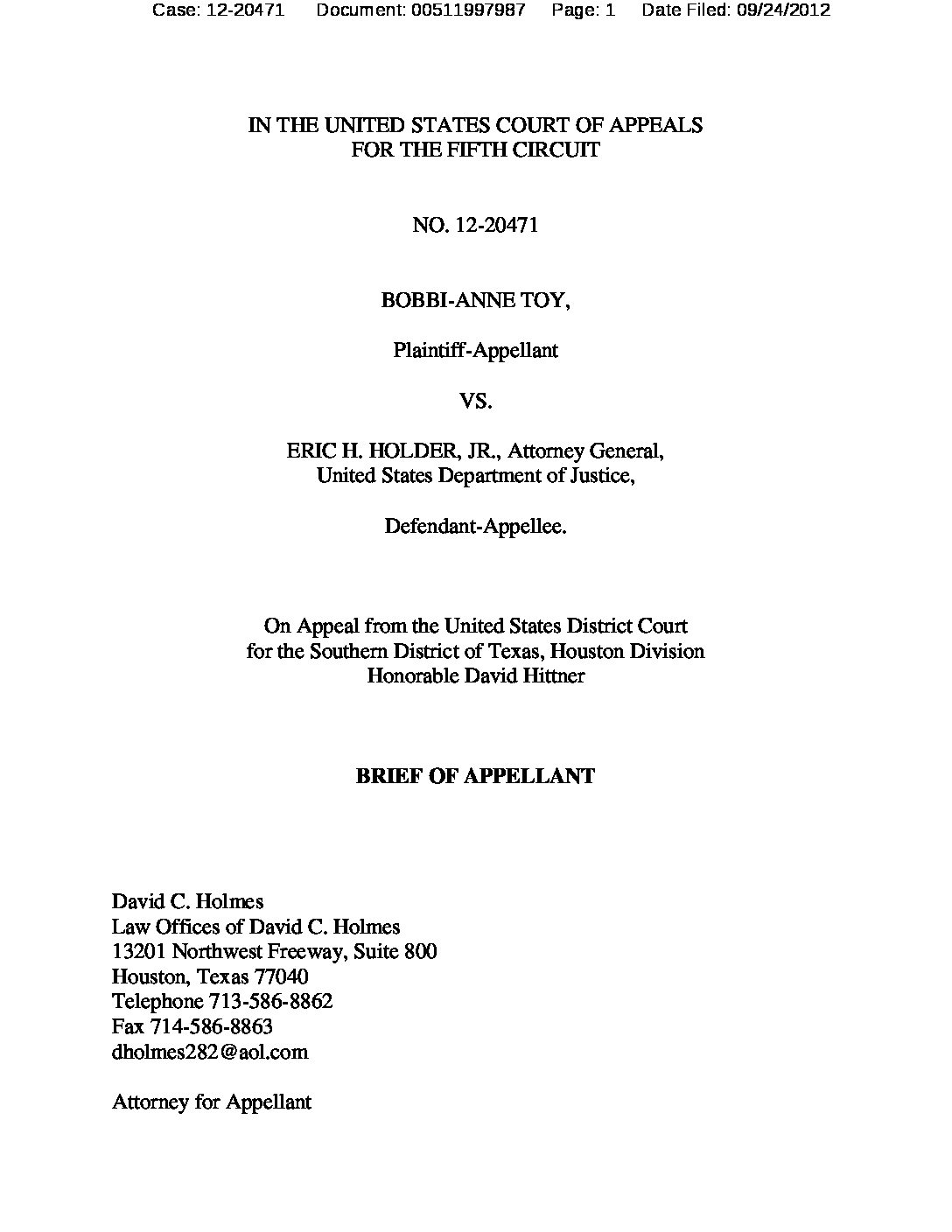
Fifth Circuit to Decide Scope of the National Security Exemption Under Title VII
Title VII of the Civil Rights Act of 1964 contains a national security exemption, which prohibits any discrimination claim based on the denial or revocation of a security clearance. The rationale for this exemption is that the federal agencies should not be required to defend the basis for security classification decisions in court. The Supreme Read More
Read More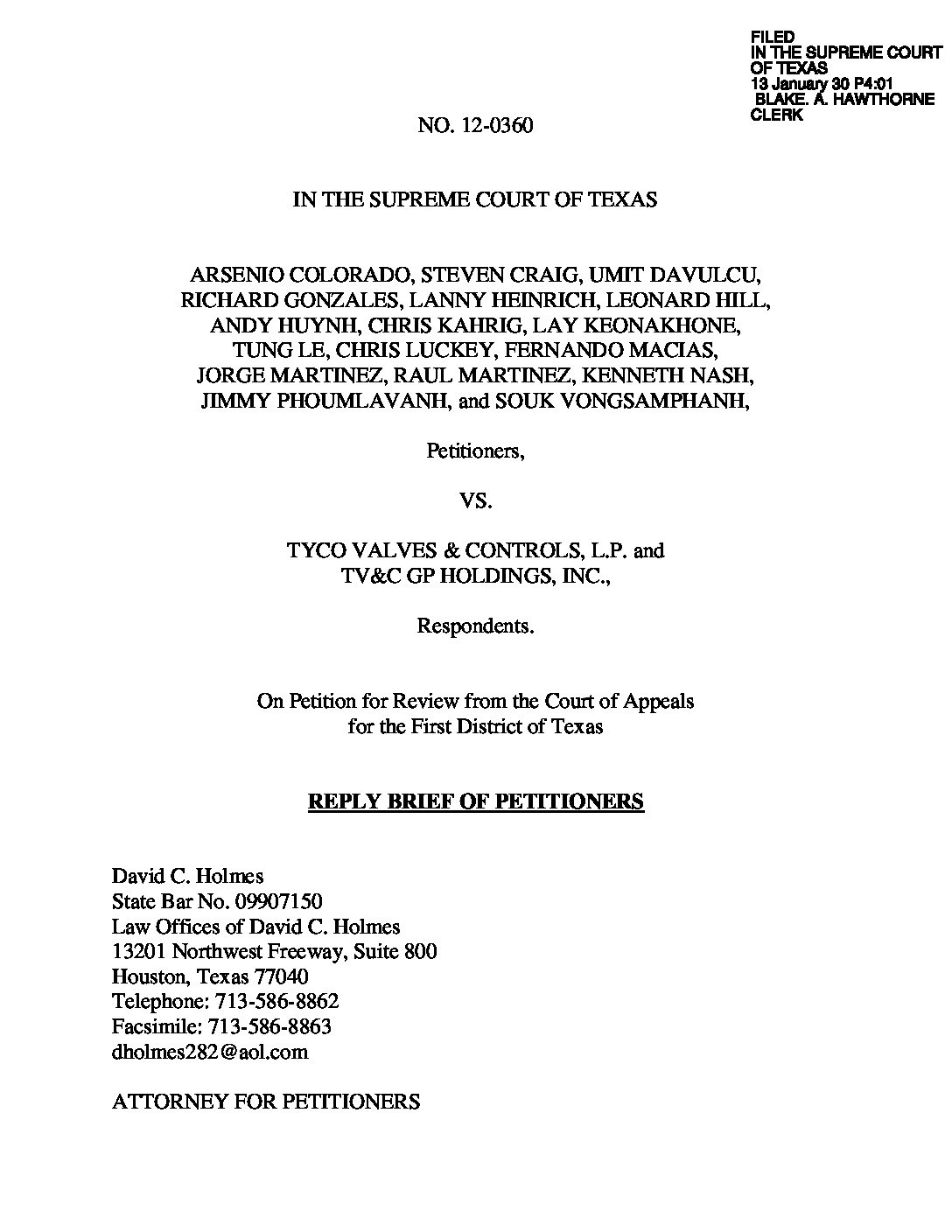
Texas Supreme Court to Decide Whether 17 Former Tyco Employees Are Entitled to Severance Pay
On Friday, the Texas Supreme Court granted the petition for review in Arsenio Colorado v. Tyco Valves and Controls, L.P., No. 12-0360. The case involves the enforceability of employment contracts between Tyco Valves and 17 of its former employees (the Gimpel Employees). The author is counsel for the Gimpel Employees. The 17 Gimpel Employees worked in Read More
Read MoreThe Supreme Court Holds That an Employer May Use Offers of Judgment to “Pick Off” the Class Representatives in an Overtime Suit, But Refuses to Decide the Key Mootness Issue
In a highly anticipated decision, the Supreme Court held today that an employer who is facing a potential collective action for unpaid overtime may use the offer of judgment procedure in Fed. R. Civ. P. 68 to “pick off” the class representatives and thus thwart the collective action. Genesis Healthcare Corp. v. Symczyk, No. 11-1059 Read More
Read MoreEEOC’s Joint Employer Claim Against Valero Fails
In EEOC v. Valero Refining-Texas, L.P., 2013 U.S. Dist. LEXIS 42776 (S.D. Tex. March 13, 2013), Judge Costa considered the application of the “joint employer” doctrine to a disability discrimination claim brought by the EEOC. The facts of the case are simple and in fact fairly commonplace. Valero operates a refinery in Texas City. Valero hired Read More
Read MoreEEOC Claims Against Bass Pro Outdoor World Survive Motion to Dismiss
In 2011, the EEOC commenced a proceeding against Bass Pro Outdoor World for racial discrimination. The EEOC has alleged a wide range of racial remarks and slurs, but the cornerstone of the lawsuit is a comment by the owner of BPOW (Johnny Morris) in 2004 or 2005 at a meeting of Store General Managers. When asked Read More
Read MoreAustin Court of Appeals: The Date Listed on a Charge of Discrimination Limits the Scope of the Claim
The Austin Court of Appeals considered claims of race discrimination and sex discrimination by a probationary Austin firefighter in Booker v. City of Austin (March 13, 2013). The specific discussion of the merits of the case is mundane. If the facts recited by the court are accurate, then the plaintiff was doomed to lose. The potentially Read More
Read MoreEl Paso Court of Appeals Affirms Age Discrimination Verdict
The El Paso Court of Appeals considered an age discrimination claim in Williams-Pyro, Inc. v. Barbour (March 20, 2013). A jury had found that the employer terminated the plaintiff because of her age, and the court affirmed. The plaintiff (Rhonda Barbour) worked for the company for 18 years. In 2005, a new supervisor (Montalvo) began making age-related Read More
Read MoreWhat Are the Rights of an At-Will Employee in Texas?
The vast majority of workers in Texas are at-will employees, which means that they can be fired for a good reason, a bad reason, or no reason at all. For a general discussion of at-will employment, click here. So what are the rights of at-will employees in Texas? This article provides a general discussion of the Read More
Read MoreBeaumont Court of Appeals: Age Discrimination Claim Accrued When Layoffs Were Announced, Not When They Occurred
The Beaumont Court of Appeals considered an age discrimination claim in Floersheim v. Motiva Enterprises, LLC, which was decided on March 28, 2013. The employer laid off the plaintiff from his job at a factory. The plaintiff later filed a charge of discrimination based on age with the Texas Workforce Commission. The employer moved for Read More
Read MoreFifth Circuit: No Attorneys’ Fees in a Mixed-Motive Retaliation Case If the Employer Proves That the Employee Would Have Been Fired Anyway
In Carter v. Luminant Power Services Co., No. 12-10642 (5th Cir. April 3, 2013), the Fifth Circuit addressed an unusual question of statutory construction relating to Title VII. The plaintiff had complained to his employer about race discrimination. His employer subsequently disciplined him. The plaintiff brought a Title VII action, claiming that the discipline constituted Read More
Read More